Non-GamStop European Casinos: What UK Players Should Know
 Available in GB

European is a geographic label, not a shared gambling licence or exclusion system; coverage depends on the scheme and participating operators.
Table of Contents
- European Online Casinos and the Limits of GamStop
- Roulette Doesn’t Change the Exclusion Rules
- Casino Sites: Excluding Yourself from One Account
- No-Deposit Bonuses Are Still Gambling
- What “Not on GamStop” Actually Means
- Choosing a Casino Without Treating “Best” as a Promise
- If You’re in the UK, Exclude Yourself Where You’re Tempted
- Crypto Searches Don’t Remove the Need for Limits
- Real-Money Gambling and the Point of Self-Exclusion
European Online Casinos and the Limits of GamStop
The word “European” can sound reassuringly specific, but it does not tell you whether a casino is covered by GamStop. Europe is a broad geographic label, not a single gambling licence or a shared exclusion system. A site may describe itself as European because of where its business is based, the countries it serves, or the licence it holds. None of those descriptions, by itself, establishes whether GamStop can block access to it.
GamStop is the national online self-exclusion scheme for Great Britain. It works across participating licensed online gambling websites and apps, rather than acting as a universal filter for every casino that might be called European. That distinction matters if you are trying to understand what an exclusion can and cannot do. It is not a block on the whole internet, and the word “European” does not expand its reach.
I used to treat labels like “international” as if they answered the important questions. They do not. What matters is whether a gambling business is within the scheme’s coverage and whether it is operating under the rules that apply to the British market. A European casino’s branding or location is not a substitute for that information.
When looking at non-GamStop European casinos in 2026, payout timing is one practical detail you can check. The verdicts below stick to the information available for each operator.
1. Jetsetspins
Payout speed: 1-3 business days Jetsetspins lists a payout speed of 1–3 business days, which gives you a stated timeframe to consider.
2. Amunbet
Payout speed: 1-3 business days Amunbet lists a payout speed of 1–3 business days, giving you a stated timeframe for payouts.
3. Revery Play
Payout speed: 1-3 business days Revery Play lists a payout speed of 1–3 business days, a useful detail for you to factor into your review.
4. EvoSpin
Payout speed: 1-3 business days EvoSpin lists a payout speed of 1–3 business days, so you have a stated timeframe to refer to.
5. Britsino
Payout speed: 1-3 business days Britsino lists a payout speed of 1–3 business days, providing you with a stated payout timeframe.
6. SlotoSport
Payout speed: 1-3 business days SlotoSport lists a payout speed of 1–3 business days, a timing detail you can consider.
7. x3bet
Payout speed: 1-3 business days x3bet lists a payout speed of 1–3 business days, giving you a stated timeframe to keep in mind.
8. WinBeast
Payout speed: 1-3 business days WinBeast lists a payout speed of 1–3 business days, which gives you a specific timing detail to assess.
9. NightLuck
Payout speed: 1-3 business days NightLuck lists a payout speed of 1–3 business days, offering you a stated payout timeframe.
10. NightWin
Payout speed: 1-3 business days NightWin lists a payout speed of 1–3 business days, a stated timing detail for you to consider.
Geography is not the same as coverage
When people talk about European online casinos, they may mean sites based in another European country, sites serving customers across several countries, or simply online casinos with a European style of branding. Those descriptions can point to quite different businesses. They do not prove that a particular website is licensed for British customers, nor do they tell you whether it participates in GamStop.
For people in Great Britain, online gambling businesses selling into the market must hold the relevant Gambling Commission licence. GamStop’s role is narrower and clearer: it blocks access across participating licensed online gambling sites and apps. So a site being physically based in Europe does not make it part of the scheme, and a site being outside Great Britain does not automatically mean it is beyond the rules for businesses serving British customers.
That can be easy to miss when a page uses broad terms such as “European casino online” or “international casino”. They describe a sales pitch or an apparent location, not an exclusion arrangement. I would not treat either phrase as evidence that a site is safe to use during self-exclusion.
What the distinction means in practice
If you have excluded yourself through GamStop, the scheme is meant to block access to the participating licensed gambling platforms covered by it. It is not a promise that every site a person might encounter under a European label will be blocked. That limit is not a loophole to test. It is a reason to avoid assuming that a site outside the scheme is an acceptable place to gamble.
Casino sites not on GamStop in the UK: what to know
Trying to open an account elsewhere to get around an active exclusion can put that exclusion at risk and may breach its terms. I know how quickly “just checking” can turn into another account and another deposit. Don’t do it. If you are tempted to gamble, make sure your exclusion covers the places where that temptation is likely to lead you, rather than relying on a label or a website’s claims.
The same caution applies to lists promising the best European online casino sites. A ranking cannot establish whether an operator is covered by GamStop, and the word “best” says nothing about whether using a site fits your circumstances. A site may present itself as a European online casino while still being outside the scheme’s coverage. That does not make it a suitable alternative for someone who has self-excluded.
The useful distinction is simple: GamStop is a multi-operator scheme for participating licensed online gambling websites and apps, not a universal block on every casino described as European. Keep that boundary in mind when reading site descriptions. If you are already self-excluded, do not use the boundary as a route around your decision. Better to keep away.
Roulette Doesn’t Change the Exclusion Rules
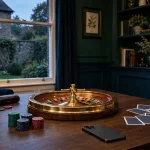
When I was looking at roulette, it was easy to make the game feel like a separate decision. I could tell myself I was only comparing tables, or that a particular style of play somehow sat outside the problem I was trying to control. It doesn’t. The game you choose does not change what self-exclusion means or remove the commitment you have made.
A different game or a "premium" label does not change the terms of your self-exclusion or make the commitment optional.
Self-exclusion is a formal agreement with a gambling company: you ask it to stop you betting with it for a set period. The agreement is about gambling, not about a particular game. If you have excluded yourself, searching for a European roulette table, a premium-looking room or a VIP label does not turn that commitment into something optional. A different name on the screen does not make the underlying decision safer.
That sounds obvious when you put it plainly. It can feel less obvious when a site presents roulette as a fresh start. “Premium” is a label, not a safeguard. “VIP” is a marketing description, not permission to ignore an exclusion. I have caught myself treating a new format as though it were a new set of rules. It wasn’t. Just another route back to the same impulse.
The game is not an exception
In Great Britain, gambling businesses must make self-exclusion available to customers. That does not mean every business is part of the same scheme, or that a label describing a casino as European tells you what your existing agreement covers. The important point is the agreement you have already made and the places it applies to.
If your exclusion is active, taking part in gambling somewhere else to get around it may breach its terms. That includes signing up for a different account because roulette is available there, or because the site presents itself as a more exclusive alternative. Don’t open another account elsewhere to work around an exclusion. A new account can make access easier, but it does not make the choice consistent with the commitment you made.
Non-UK-Regulated Casinos: UK Rules Explained
I used to look for distinctions that would let me carry on without admitting I was doing that. A different table. A different brand. A different reason for logging in. Those distinctions felt persuasive in the moment; afterwards, they looked like ways of negotiating with a boundary I had set for myself. The boundary mattered more than the game.
Take the agreement seriously
Self-exclusion is not a promise that a gambling company can make every decision for you. The company agrees to stop you betting with it, and you remain responsible for sticking to the agreement. That responsibility can feel unfair when temptation is right there, but it is still part of what self-exclusion means. Treating the agreement as a rule only when it is convenient weakens the protection you were trying to put in place.
The period is set as part of the exclusion. The available general guidance describes self-exclusion as lasting between six months and five years, but the key point here is not to bargain with the duration by looking for another roulette option. If the urge to play has shifted from one place to another, that is a reason to take the exclusion seriously, not a signal that you have found a harmless loophole.
I’m not going to call one roulette destination “best” for someone who has an active exclusion. A polished presentation, an exclusive-sounding label or the fact that a site offers the game you want cannot establish that using it is appropriate for you. That would be an advert’s answer, not a useful one. The honest answer is less exciting: the game does not change the commitment.
Breach of Terms
Trying to open a new account to get around an active exclusion can breach the terms of your agreement and put your recovery at risk.
If you have excluded yourself from one place and feel pulled towards another, pause before creating an account or placing a bet. Remember what you agreed to, and avoid gambling wherever doing so would undermine that agreement. If you have made an exclusion across more than one place, respect its scope rather than testing its edges. No clever workaround. Just a boundary you chose for a reason.
A regulator cannot refund money you have spent gambling. That is another reason not to treat a new roulette account as a harmless experiment or assume you can undo the consequences afterwards. If the choice is between following an active exclusion and trying a different table, the table is not the important part. The commitment is.
I know how quickly a search for a game can become a search for an excuse. I have done that mental shuffle myself: this site looks different, this table feels different, so perhaps the old rule does not apply. But self-exclusion is not a game-specific setting. Keep it intact, and don’t let a roulette label talk you into acting as though it is.
Casino Sites: Excluding Yourself from One Account
If one gambling account is where you keep going back, you can ask that business to exclude you directly. This is different from arranging an exclusion across multiple operators: the request is to the individual gambling business, whether you use its website or app. Gambling businesses must provide self-exclusion as a legal requirement.
I used to treat the account menu as somewhere to look only when I wanted to change a password or payment setting. For self-exclusion, look instead for a page labelled Responsible Gambling or Safer Gambling. Follow the instructions there to make the request. If you cannot find them, contact customer services and say plainly that you want to self-exclude. Don’t settle for a vague request to “take a break” if what you mean is that the business should exclude you.
Non-UK Registered Casinos: Licensing and Oversight
Once you and the business have made a self-exclusion agreement, it has specific responsibilities. It must close your account, return the funds held in it and remove your details from its marketing databases. That matters: an exclusion is not just a setting you switch on while leaving the account otherwise open. Keep the confirmation you receive, so you have a record of what was agreed.
Get it in writing.
I learned not to rely on an assumption that a site understood what I meant. Use clear wording, complete the steps it gives you and keep any confirmation or correspondence. If you contact customer services because the instructions are hard to locate, ask them to explain how to complete the exclusion rather than accepting an informal reassurance that they will “sort it”.
A single-site request has a limited reach: it concerns the gambling business you contacted. It does not, by itself, amount to a request to every other casino or app. If the same company operates more than one service, make sure the response explains which account or services the agreement covers. Don’t assume that a similar name means the same account, or that one request automatically applies elsewhere.
That distinction is worth taking seriously when you are looking at European casino sites or comparing claims about casinos outside GamStop. A site’s description does not tell you what an exclusion agreement with another business covers. Nor is opening a different account a sound way to get around a restriction you have agreed to. If you are already excluding yourself, don’t create another account elsewhere to keep gambling.
Requesting Single-Site Exclusion
Locate the section
Look for a page labelled Responsible Gambling or Safer Gambling in the account menu.
Submit the request
Follow the instructions to self-exclude or contact customer services and clearly state that you want to self-exclude.
Confirm in writing
Complete the required steps and keep the written confirmation or correspondence as a record of the agreement.
For people in Great Britain, remote operators offering gambling to customers must hold a UK Gambling Commission licence. A site presenting itself as European does not change that requirement when it serves the British market. Where you are unsure who operates an account or how to make a formal request, use the site’s safer-gambling instructions or contact its customer service team directly.
I know the temptation to keep browsing for a site that feels like an exception. But if your decision is to stop with one business, make the request directly, wait for written confirmation and let the account close. No clever workaround.
No-Deposit Bonuses Are Still Gambling
A no-deposit offer can sound like a way to have a go without putting your own money in first. The wording does a lot of work: “free” suggests there is nothing to lose. But a promotion does not change what you are doing. If you place bets or play casino games, it is still gambling.
I have learned to distrust the little label more than the offer itself. “No deposit” describes a marketing hook, not a safeguard. It does not tell you whether an offer is suitable for you, remove the risks of gambling, or make it a sensible exception to a decision to stop.
That matters if you have self-excluded. The point of self-exclusion is to keep you away from the gambling business or venues you chose to exclude yourself from. Those businesses must refuse service to self-excluded customers. Looking for a European casino no-deposit bonus does not make it appropriate to find another place to gamble instead.
Trusted Casinos Not on GamStop UK: What to Check
If an exclusion is already in place, don’t open another account elsewhere to get around it. Playing at a non-GamStop casino could breach the terms of your self-exclusion. A bonus is not a loophole, and calling it a free bonus does not make the underlying activity harmless. Step away from the offer and stick with the boundary you set.
That can be harder than it sounds. I know how quickly “just checking” an offer can turn into browsing games, entering details and convincing yourself that the rules do not quite apply this time. It is easy to focus on the advertised perk and ignore the reason you were trying to stop. That is the trap.
The offer is not the important part
Searches for European casinos with no-deposit bonuses, or for the best European online casino no-deposit bonus, make the promotion sound like the main decision. If you are self-excluded, the more important question is whether gambling at that site would take you around a commitment you made. If the answer may be yes, close the page. You do not need to assess the offer first.
There is no special category of bonus that turns gambling into something other than gambling. Whether a promotion asks for an initial deposit or advertises play without one, the label does not cancel the risk. Nor does a European-sounding name tell you that the site is an appropriate place for a UK player to gamble.
In the UK, online gambling is legal only at sites licensed and regulated here. A promotion does not change that, either. And if you have excluded yourself from a business, it should refuse to serve you; trying a different account or another site is not a safe workaround.
No-deposit bonuses are still gambling; they do not remove the risks of gambling or create a safe exception to a decision to stop.
I would treat any “free” pitch as a reason to pause, not as permission to start. If you have chosen self-exclusion, honour that choice rather than testing whether a bonus feels different. The offer can wait. Your boundary matters more.
What “Not on GamStop” Actually Means
“Not on GamStop” describes a relationship with the self-exclusion scheme, not a special kind of European casino. A site may use European branding or be based elsewhere, but that does not tell you whether it is part of the UK system. The key distinction is whether the operator is licensed to serve customers in Great Britain and therefore has to follow the relevant UK requirements.
The Gambling Commission made participation in GAMSTOP compulsory for online operators on 31 March 2020. That means a UK-licensed online casino cannot simply opt out of the scheme. If someone has registered with GAMSTOP, participating operators are required to block access to their gambling platforms. The scheme is designed to apply across UK-licensed online operators, rather than only at one casino.
I used to read “not on GamStop” as if it were just another feature label. It isn’t. It can mean that a site is outside the system that blocks access across UK-licensed platforms. And if a business is taking British customers without the required UK licence, it is outside the UK regulatory system too. Those are important distinctions; the phrase itself does not confirm a site’s licence or make it an approved alternative.
So when you see claims about European casinos that do not use GamStop, don’t assume the location explains the situation. A European operator serving customers in Great Britain must hold the appropriate Gambling Commission licence. A site not connected to GAMSTOP is not thereby exempt from UK requirements if it is offering gambling to people here. “European” is a description, not a safeguard.
British casinos not on GamStop: what to check
For me, the practical point is blunt: if you chose GAMSTOP because you needed a barrier, looking for a casino beyond that barrier does not undo the reason you chose it. Playing elsewhere to get around an active exclusion could breach its terms. Don’t open another account as a workaround. Gambling businesses must offer self-exclusion by law, and the purpose is to stop you gambling with the businesses covered by your agreement—not to provide a route to continue somewhere else.
It also helps to be clear about what GAMSTOP can and cannot do. It blocks access across participating UK-licensed online sites and apps; it does not make every website carrying the word “casino” part of that network. Nor can the Gambling Commission refund money you spend gambling. If you’re already excluded, treat the exclusion as something to respect, not a technical obstacle to test.
The phrase may sound like a neat category. In practice, it tells you only that the site is not covered by GAMSTOP. That is not the same as saying it is suitable, safe, or authorised to serve you in Great Britain. Don’t confuse the label with permission.
Choosing a Casino Without Treating “Best” as a Promise
A “best” label sounds like a verdict. In practice, it can hide the question that matters: best for whom, and on what basis? A casino directory or ranking can put names side by side, but that does not make its claims a guarantee of safety, suitability or a good experience. I’ve learned to be wary of polished labels. They make a choice feel settled before you’ve looked at what it means for you.
Do
- Check if the operator is authorised to serve UK customers
- Understand account controls and terms before depositing
Don’t
- Rely on a “best” label as a guarantee of safety
- Use rankings to find a way around an active exclusion
That matters because the word European describes a broad market, not a single set of protections for someone in the UK. For real-money online gambling offered to people in Great Britain, operators must hold the relevant UK Gambling Commission licence. A label or a ranking is not a substitute for that distinction.
The same goes for requests for lists of European casino games, slots or roulette options. A catalogue may help you identify what a site says it offers, but it cannot decide whether gambling is right for you. Nor does a game preference change the terms of an exclusion. Looking for a highly rated roulette casino when you are trying to stay away from gambling can turn a game search into a route back to the behaviour you meant to stop.
If you have registered with GamStop, do not open an account elsewhere to get around that decision. GamStop is designed to block access to existing accounts and prevent new ones with online gambling operators across the UK. Trying another account or a different site can undermine the boundary you set and may breach the terms of your self-exclusion. That is not a harmless workaround.
I know how easy it is to tell yourself that one more comparison is just research. Sometimes it is. But if you are using rankings to find somewhere to play despite an active exclusion, the ranking is not solving the problem; it is helping you step around a limit you chose. Pause there. No clever ranking changes that.
Non-Gamstop Curaçao Casino Sites: What to Check · Online Slots Not on GamStop: What the Term Means · Malta-Licensed Online Casinos in the UK: What to Check
If you are not self-excluded and are assessing an online casino, focus on concrete questions rather than a “best” badge: is the operator authorised to serve UK customers, and can you understand the account controls and terms before committing money? A recommendation cannot make those checks for you, and a familiar-sounding name does not prove that a particular site is suitable.
There is no universal winner that fits every player. For anyone already excluded, the useful choice is not a different casino; it is not to use another account to bypass the exclusion. That’s the line.
If You’re in the UK, Exclude Yourself Where You’re Tempted
When you’re trying to step away from gambling, it helps to think beyond the one website that happens to be open on your phone. Temptation can show up in different places: online at home, or in a land-based casino when you’re out. An exclusion that covers only one setting may leave the other untouched.
For online gambling, you can register with GamStop to exclude yourself across participating online operators, or contact individual casinos directly. For land-based casinos, ask for self-exclusion at the customer service desk. Gambling businesses must offer self-exclusion by law, so asking for it is a straightforward request, not something you need to justify.
I’ve learned not to treat a plan as solid just because it sounds solid in my head. If you know you might be tempted by European casinos that accept UK players, or by a visit to a casino in person, think about both routes before you act. The useful question is not which site looks appealing; it is where you might gamble when the urge returns.
Effective Exclusion Steps
- Register with GamStop for participating online operators
- Request self-exclusion directly from individual online casinos
- Ask for self-exclusion at the customer service desk of land-based casinos
- Maintain a list of all places where you are tempted to gamble
Make a list of the places and formats that feel relevant to you, then take the exclusion steps for each. That might mean using GamStop for online gambling and separately asking a land-based casino to exclude you. A request made in one setting should not be assumed to cover another.
No loopholes. If you have excluded yourself from one place, don’t open another account elsewhere to get around that decision. Playing at a non-GamStop casino could breach the terms of your existing self-exclusion. A different label or a European-facing website does not make the risk disappear.
Self-exclusion is a boundary you set, not a way to recover money already spent. The Gambling Commission cannot refund gambling losses. If you’re making this choice because gambling has become difficult to control, cover the places where you’re most likely to be tempted rather than relying on willpower in the moment.
I know the pull of looking for the “best” online casino for European players can make the next account seem like a fresh start. It isn’t a safeguard. Put the exclusions in place across the settings that matter to you, and give yourself fewer routes back in. That’s the practical part.
Crypto Searches Don’t Remove the Need for Limits
A casino’s use of “European” or “crypto” in its description tells you little about the safeguards that matter when you are gambling from the UK. I’ve learned not to treat a payment label as proof that an account is suitable. The key question is whether the operator is allowed to serve customers here and provides the controls required for UK players.
Casinos That Bypass GamStop: What UK Players Should Know
Remote gambling operators selling into Great Britain must hold a UK Gambling Commission licence. For a UK-licensed account, the operator must verify your age before allowing you to deposit. It must also prompt new customers to set a financial limit before their first deposit and make account-level limit controls accessible.
That is worth checking before money goes in, not after a session has started. Find the account controls and understand how to set a limit. If you cannot locate them, do not assume the feature is absent or that a payment method changes the rules; contact the operator and get a clear answer before depositing. A crypto payment option is not a substitute for a financial limit.
I used to focus on how an account let me pay, while giving much less thought to what would help me stop. That was backwards. The useful test is whether you can set a boundary before gambling and reach the controls when you need them. If you are already worried about keeping to a limit, stepping away is more useful than searching for a different way to fund an account.
There is no need to turn this into a list of supposed top European casinos. A ranking would not tell you whether a particular account’s safeguards fit your needs, and a “top” label is not a guarantee. For UK customers, the legal framework matters: online gambling is legal only with operators holding the required UK licence. A site describing itself as European or crypto-focused does not, by that wording alone, establish that it meets that requirement.
Check the safeguards first. Then decide whether to deposit at all.
Account Safeguards
Always verify the operator’s license and set financial limits before depositing, as payment methods like crypto do not replace these protections.
Real-Money Gambling and the Point of Self-Exclusion
Real-money gambling can make a decision feel smaller than it is: one more account, one more deposit, one more chance to change the mood. I know how easy it is to focus on the next click and push the bigger issue aside. Self-exclusion is meant to interrupt that pattern. It is a formal agreement not to gamble with the business or scheme you have excluded yourself from, not a setting you switch on while carrying on elsewhere.
That agreement has a clear purpose, but it is not a substitute for your own commitment. The gambling business must take reasonable steps to stop a self-excluded customer from gambling, and businesses must provide a way to self-exclude. Still, you remain responsible for sticking to the agreement. A safeguard can help create distance; it cannot make the decision for you.
This matters when a European casino or another real-money site presents itself as a fresh start. A different name or an appealing offer does not change what you agreed to. Playing at a non-GamStop casino while self-excluded could breach the terms of your exclusion. Don’t open another account elsewhere to get around it. That is not a clean workaround. It can undermine the boundary you chose to put in place.
I’ve found it more useful to treat exclusion as a commitment that needs to cover the places where temptation actually shows up, rather than as a box ticked once and forgotten. If you are looking at European casinos in 2026, or even at a promotion such as free spins, pause before turning that interest into a deposit. The question is not whether the offer looks different. It is whether gambling fits with the exclusion you have made.
And if gambling has already cost you money, do not assume that contacting the regulator will recover it. The regulator cannot refund money spent gambling. Self-exclusion is there to help prevent further gambling with the businesses covered by it, not to reverse past spending or erase your responsibility to honour the agreement.
That’s the hard line.
Safety and Licensing for UK Online Casinos
Why a Non-GamStop Casino Can Put Your Exclusion at Risk
When you have self-excluded, a casino described as outside GamStop can look like a way around the block. I understand the temptation: when I was chasing a loophole, the label sounded like a technicality. It isn’t a reason to treat the exclusion as irrelevant.
Self-exclusion is an agreement not to gamble with the venues or websites you have excluded yourself from. If you play elsewhere to get around that agreement, you may breach its terms. The fact that a site is described as not part of GamStop does not change the commitment you made. And a label is not a safeguard.
There is a practical point here, too. Self-exclusion only does its job at the places included in it. If there are other sites or venues where you could be tempted, leaving them out may leave a gap. Gambling businesses must offer self-exclusion, but you still need to identify the places that matter to you and take the step to exclude yourself there. Be honest with yourself about where you might go when an urge hits. That is more useful than trying to find a loophole.
Non-Gamban Casinos in the UK: What the Label Means · Anjouan Casino Licence for UK Players: What It Means · Curacao casino licence in the UK: legal status
A non-GamStop casino is not a safe workaround. Opening another account elsewhere to get around an exclusion can put your recovery plan at risk; don’t do it. If you have already excluded yourself, keep the agreement in view and avoid gambling in places not covered by it. The point is to reduce access when you are vulnerable, not to find a different door.
If money has already been spent, self-exclusion is not a way to get it back. The regulator cannot provide refunds for gambling losses. That can be hard to accept. I’ve had to.
Instead of relying on a casino’s description, use the exclusion process for every place where you may be tempted to gamble, online or in person. Make a clear list, register your details, and keep the confirmation. A block can help create distance, but it cannot make the decision for you. Don’t turn one exclusion into a reason to seek another account.
How does self-exclusion work?
You choose the gambling sites or venues to exclude yourself from, provide information to confirm your identity and select a period. The businesses covered by your exclusion must refuse you service; for an online account, they must also close it, return any funds and remove you from marketing lists.
How do I return from self-exclusion?
For a GamStop exclusion, you must contact GamStop directly to request removal. A 24-hour cooling-off period applies, and after removal operators may need another 24 to 48 hours to update your status.
How long does it take for GamStop to become active after sign-up?
The 24-hour cooling-off period begins once your identity has been verified, and your exclusion remains active during that period.
How does GamStop benefit me?
GamStop blocks you from accessing current accounts or opening new ones with participating UK-licensed online gambling operators. Registration is free.
How does a non-GamStop casino handle self-exclusion?
You can ask an individual online casino to exclude you through its Responsible Gambling or Safer Gambling page, or by contacting customer services. That request applies to that business; GamStop covers participating licensed online sites and apps.
What self-exclusion options are available at non-GamStop casinos?
You can request self-exclusion from an individual online casino through its Responsible Gambling or Safer Gambling page, or by contacting customer services. You can also register with GamStop to exclude yourself from participating licensed online gambling sites and apps.

Anjouan Casino Licence for UK Players: What It Means
An Anjouan licence signals an offshore regulatory framework, but does not establish UK authorisation or...

British casinos not on GamStop: what to check
The label “not on GamStop” does not establish a casino’s regulator or show which protections...

Casino sites not on GamStop in the UK: what to know
GamStop covers participating UKGC-licensed operators, while access to other sites does not establish that they...

Casino Without a UK Licence: What It Means
An overseas licence does not mean UKGC approval, and the difference can affect player protections,...

Casinos That Bypass GamStop: What UK Players Should Know
GamStop follows UKGC licensing, while overseas sites may sit outside its exclusion system and safety...

Curacao casino licence in the UK: legal status
A Curacao licence identifies an offshore jurisdiction, but does not establish UKGC regulation or permission...

Gibraltar casino licence in the UK: what it means
A Gibraltar licence identifies the regulator overseeing an operator, but does not establish that it...

Merkur Casino Online UK: Account and Withdrawal Checks
A practical guide to operator checks, demo play, UK slot rules, stakes and bonus terms...

Most Trustworthy Online Casinos in the UK: How to Check
A practical look at what UK Gambling Commission licensing means and why a site's appearance...

Non-Gamban Casinos in the UK: What the Label Means
The label describes a site's relationship with a blocking service; it does not confirm safety,...

Non-Gamstop Curaçao Casino Sites: What to Check
A Curaçao label does not establish UK authorisation, and payment or crypto terms cannot replace...

Non-UK Licence Casinos: What the Licence Means
Licensing jurisdictions set different oversight frameworks, while operators serving Great Britain require a UK Gambling...

Non-UK Registered Casinos: Licensing and Oversight
Company location, licensing and permission to serve Great Britain are distinct, with different implications for...

Non-UK-Regulated Casinos: UK Rules Explained
A practical guide to licensing, player protections, payments and the limits of relying on an...

Non-UKGC Licensed Casinos: Rules and Risks
A guide to how UKGC oversight differs from overseas licensing, including player protections, payments, disputes...

Malta-Licensed Online Casinos in the UK: What to Check
A Malta licence may show oversight in Malta, but operators serving Great Britain need permission...

Online Slots Not on GamStop: What the Term Means
The label concerns whether a casino falls under UKGC regulation and GamStop participation, not whether...

Safe Online Casinos in the UK: What to Check
A practical check of licensing, safer-play protections, bonus conditions and payment practices helps distinguish regulation...

Trusted Casinos Not on GamStop UK: What to Check
The guide explains the limits of offshore licensing and covers bonus conditions, payment risks and...

Trusted UK casino: how to check the licence
The guide explains how UK licensing, verification, bonus terms and withdrawal conditions shape a casino...